Alignment, balancing, and rotation get lumped together as tire stuff, and Denver drivers are often sold one when they need another. They are three different jobs that correct three different problems. Rotation moves tires between positions to equalize wear. Balancing corrects weight distribution so a wheel rolls smoothly at speed. Alignment sets the angles at which tires meet the road. Confusing them wastes visits, because rotating tires will never fix a vibration caused by imbalance, and balancing will never fix a car that pulls to one side.
Seasons in the Piedmont give each job its moment. Potholes after winter, heat through summer, and long fall trips each reveal a different weakness, which is why this guide is organized as a seasonal checklist rather than a single interval.
What each job actually corrects
Rotation addresses wear patterns. Front tires on a front-wheel-drive car work hardest: they steer, drive, and carry most braking load, so they wear faster. Moving tires front to back on a maker-recommended pattern and interval, commonly at every oil service or at the mileage in your manual, spreads that work so all four tires reach replacement together instead of two dying early. Balancing addresses vibration. Small weights correct heavy spots in the tire and wheel assembly. Lose a weight or hit a pothole hard and a shimmy appears, typically felt in the steering wheel at highway speeds if a front wheel is out, or through the seat if a rear wheel is. Alignment addresses angles: toe, camber, and caster set by the suspension. When angles drift from specification after a pothole strike, a curb hit, or worn parts, the car pulls, the wheel sits crooked, and tires wear on one edge.

Seasonal tire checklist for Denver drivers
- Early spring, after pothole season: check alignment if the car pulls, the wheel is off-center, or a hard pothole hit happened. Pass: straight tracking and even tread. Fail: one-edge wear or a new pull.
- Every oil service, all year: rotate on the pattern in your manual. Pass: all four tires wearing at a similar rate. Fail: fronts visibly thinner than rears on a front-drive car.
- Before summer heat: check pressures monthly and inspect for cracking or bulges. Pass: pressures at the door placard value. Fail: a sidewall bulge, which means replace, not monitor.
- When a vibration appears at speed: ask for balancing diagnosis, and a check for a bent wheel. Pass: smooth at highway speed. Fail: shimmy that changes with speed, not engine revs.
- Before fall road trips: measure tread across each tire, inside edge included. Pass: even depth with margin above the wear bars. Fail: inside shoulder worn smooth, a classic alignment signature.
- After any suspension or steering repair: get an alignment. Pass: angles reset to specification after parts change. Fail: skipping it and wearing new tires on old angles.
Symptoms mapped to the right job
A pull to one side on a flat, straight road points to alignment, or to a tire problem such as mismatched pressure, so check pressures first because they are free to correct. Vibration that arrives at a specific speed and fades above or below it points to balance. Feathered tread that feels smooth one direction and rough the other across the tread points to toe misalignment. Cupped wear, a scalloped pattern around the tire, points to worn suspension parts or chronic imbalance. Noise alone is a poor guide, because worn tires get loud for several reasons.
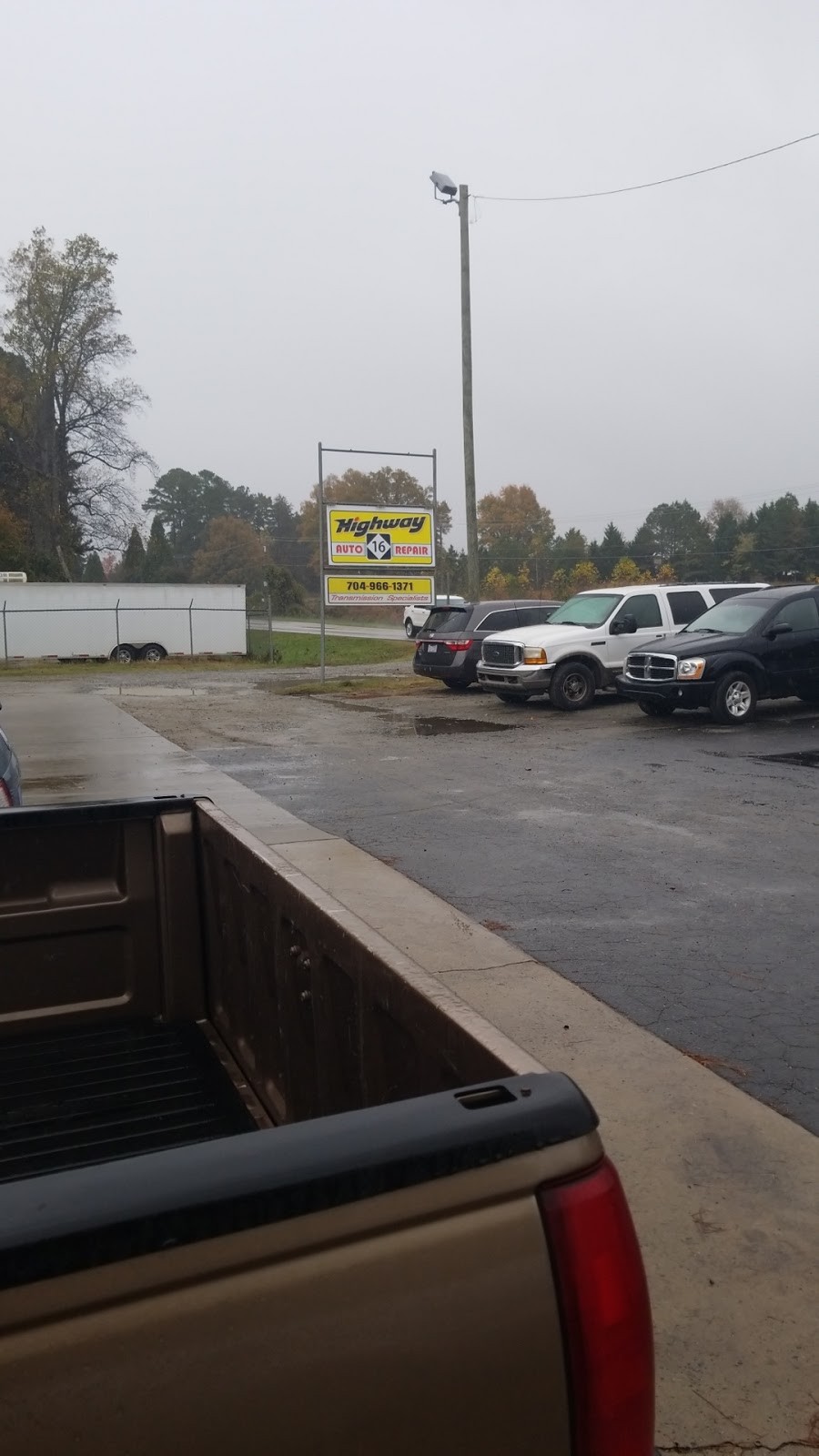
Drivers around Lake Norman and Denver also deal with gravel drives, construction zones, and red clay shoulders that hide pothole edges. A single hard impact can bend a wheel slightly or knock alignment out without any visible damage. If the car's behavior changed the day you hit something, say so at the counter. That history, shared with a shop like Highway 16 Auto Repair, LLC, turns a vague complaint into a targeted check of the corner that took the hit.
Cadence that makes sense
Rotate on schedule whether or not symptoms appear, because wear equalization only works if it happens before the difference is large. Balance when tires are mounted, when a vibration develops, or when weights are lost. Align when symptoms appear, when new tires go on, after suspension work, or after a serious impact, and consider a periodic check if your roads are rough. None of the three substitutes for the others, and a shop that recommends the one matching your symptom, rather than all three every time, is giving you the honest version of this guide in person.
Common questions
Can rotation fix a vibration?
Usually not. Vibration at speed is typically balance or a bent wheel. Rotation may move the problem to a different corner, which helps diagnosis but is not the fix.
How often should tires be rotated?
Follow your manual, which commonly aligns with every oil service. Front-wheel-drive cars wear fronts faster, so regular rotation matters most there.
Do I need an alignment with new tires?
It is strongly sensible. New tires on bad angles wear unevenly from day one, and an alignment check protects the investment you just made.
← All guides from Highway 16 Auto Repair, LLC← Back to Highway 16 Auto Repair, LLC